



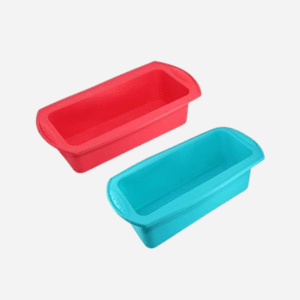
This silicone loaf pan comes as a set of two, made from thick silicone that resists bending or warping. Flexibility is the reason to choose silicone over a rigid tin: you can push the base to release a loaf rather than running a knife round the edge and tearing the crust.
Table of Contents
- Superior Quality: Substances crafted with premium materials that are both environmentally friendly and safe for your family. Its strong, thick silicone prevents it from bending or warping, extending its useful life.
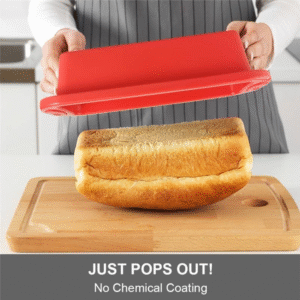
- Adaptable, Simple & Non-stick: This silicone baking pan is flexible compared to hard moulds, making it easy to pop out bread, cakes, or other delicacies. It is also naturally non-stick for rapid release, preventing mess, and easy to clean up.
- Simple To Utilise: Excellent resistance to cold and high temperature; safe operating temperature range: -40°C to 230°C (-40°F to 446°F).Safely use in oven, dishwasher, refrigerator, and microwave. Ideal for making quiche, meatloaf, lasagna, pot pies, and bread, among other things.
- Strong Bread Pan: Ideal for pizza, lasagna, fruit cakes, quiche, meatloaf, rice crispy snacks, fruit loop squares, cobbler cakes, bread loaf, and more. Our bread loaf moulds can survive baking and freezing.
- You Will Get: Two red and blue silicone loaf tins are what you will receive. There is assurance of quality. We fully accept responsibility for the calibre of our offerings, and we’ll use every effort to find a prompt and effective solution to your issue.
Note: We will send you random colours.
Why Choose This Silicone loaf pan
A silicone loaf pan is more versatile than a bread tin suggests. It suits quiche, meatloaf, lasagna, pot pies, bread, pizza, fruit cakes, rice crispy snacks, cobbler cakes, brownies, pancakes and biscuits, so a pair covers savoury and sweet baking alike. The moulds survive both baking and freezing, which means the same pan can go from oven to freezer without transferring anything.
Silicone loaf pan: Materials, Sizes and Features
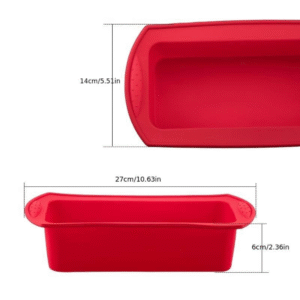
This silicone loaf pan is crafted from premium materials that are environmentally friendly and safe for your family, with strong, thick silicone that prevents it bending or warping and extends its useful life. It is naturally non-stick for rapid release, which prevents mess and makes it easy to clean, and it has excellent resistance to cold and high temperature with a safe operating range of -40C to 230C, or -40F to 446F.
Caring for Your Silicone loaf pan
Caring for a silicone loaf pan is easy given it is safe in the dishwasher as well as the oven, refrigerator and microwave. Wash it in warm soapy water or on a dishwasher cycle, and dry it fully before storing, since silicone stored damp can hold a smell. Do not cut inside the mould with a knife, as scores in the surface collect batter and cannot be cleaned out properly.
Baking in Silicone
Sit a silicone loaf pan on a flat baking tray before filling it, because a filled silicone mould is floppy and difficult to carry to the oven without spilling. The tray also gives it a firm base in the oven and makes it easy to lift out. Let a bake cool for a few minutes before flexing the mould, as pushing a hot loaf out is what breaks the crust.
Baking Tips for a Silicone Loaf Pan
Wash a new silicone loaf pan in warm soapy water before its first use. Silicone is naturally non-stick, but a light brush of oil or butter for the first few bakes helps sticky batters such as banana bread release cleanly.
Silicone heats differently from a metal tin, so bakes can need a few minutes longer. Start checking at the time your recipe gives and push a skewer into the centre of the loaf: it is done when the skewer comes out clean. Stand the pan on a baking tray, keep within the safe range of -40C to 230C, and never use silicone under a grill, on a hob or over a flame.
Let the loaf rest in the pan for about ten minutes before turning it out. Then peel the sides away gently and flex the base, and it should drop out without a knife.
Silicone suits more than bread. Use the pans for a meatloaf, a vegetable frittata or a small layered lasagne, and for sweet bakes such as brownies, a lemon drizzle loaf or a marble cake.
Freezing and Batch Cooking
Because a silicone loaf pan goes from the freezer to the oven, it is ideal for batch cooking. Assemble a meatloaf, a lasagne or a bread and butter pudding in one pan, cover it and freeze it, then thaw it in the fridge and bake it on a busy evening. With two pans in the set, one can be in the freezer while the other is in use.
The pans make neat frozen desserts too: line one with cling film, fill it with ice cream or a no-bake cheesecake mixture and freeze, then lift it out and slice. Banana bread or a fruit loaf freezes well; slice it before freezing and you can take out one piece at a time. Colours are sent at random, which helps if you keep one pan for sweet bakes and the other for savoury.
To shift baked-on spots, soak the silicone loaf pan in hot soapy water for a few minutes, then wipe it with a soft sponge. Store the two pans flat or nested, never folded or crushed under heavy tins, so they keep their shape.
Silicone loaf pan: Frequently Asked Questions
How many pans are in the set?
Two. Colours are sent at random.
What temperature range is it safe to?
-40C to 230C, or -40F to 446F.
Where can I use it?
Safely in the oven, dishwasher, refrigerator and microwave.
What can I bake in it?
Bread, brownies, cakes, pancakes, biscuits, quiche, meatloaf, lasagna, pot pies and more.
How do I get the loaf out?
Flex the mould to release it. The silicone is naturally non-stick, so it comes away without needing a knife round the edge.
More Silicone loaf pan Options
See the full baking tools range, or browse all bakeware. For guidance on safe cooking temperatures and reheating food properly, see the Food Standards Agency advice on cooking food safely.



Reviews
There are no reviews yet.