


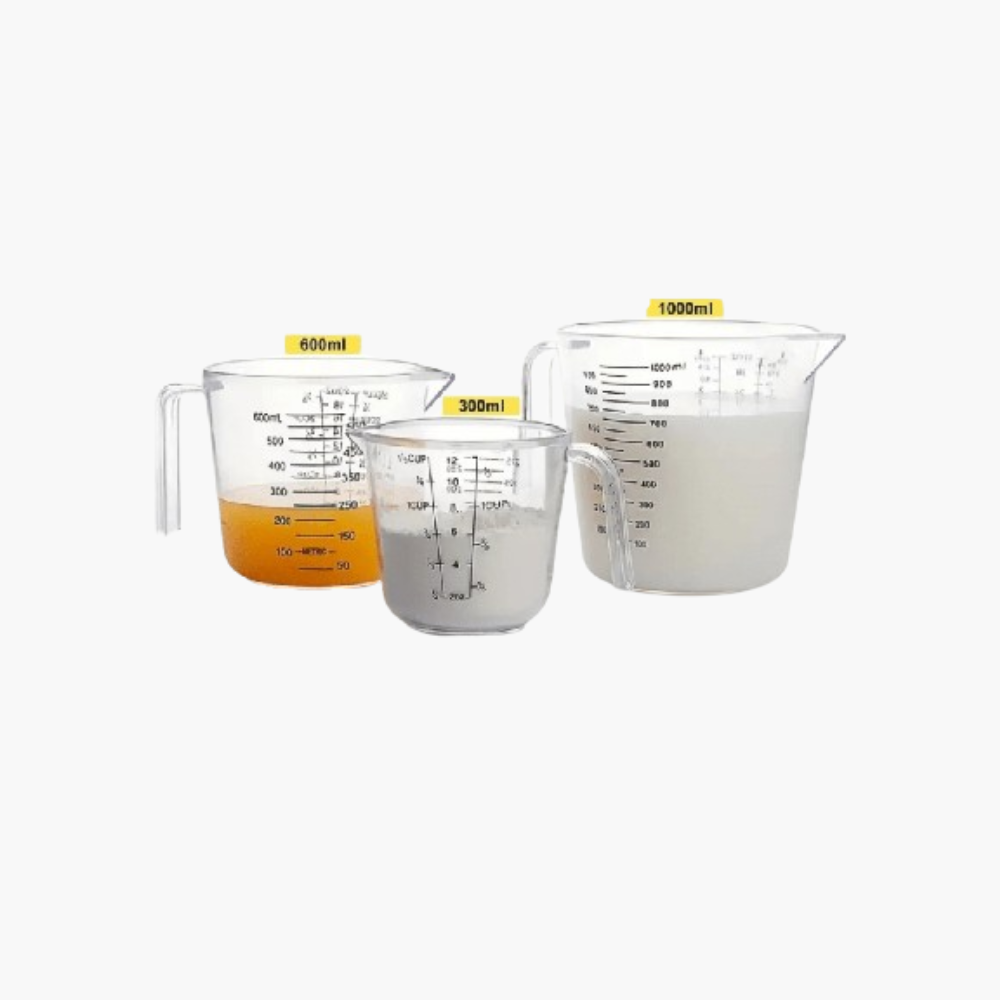
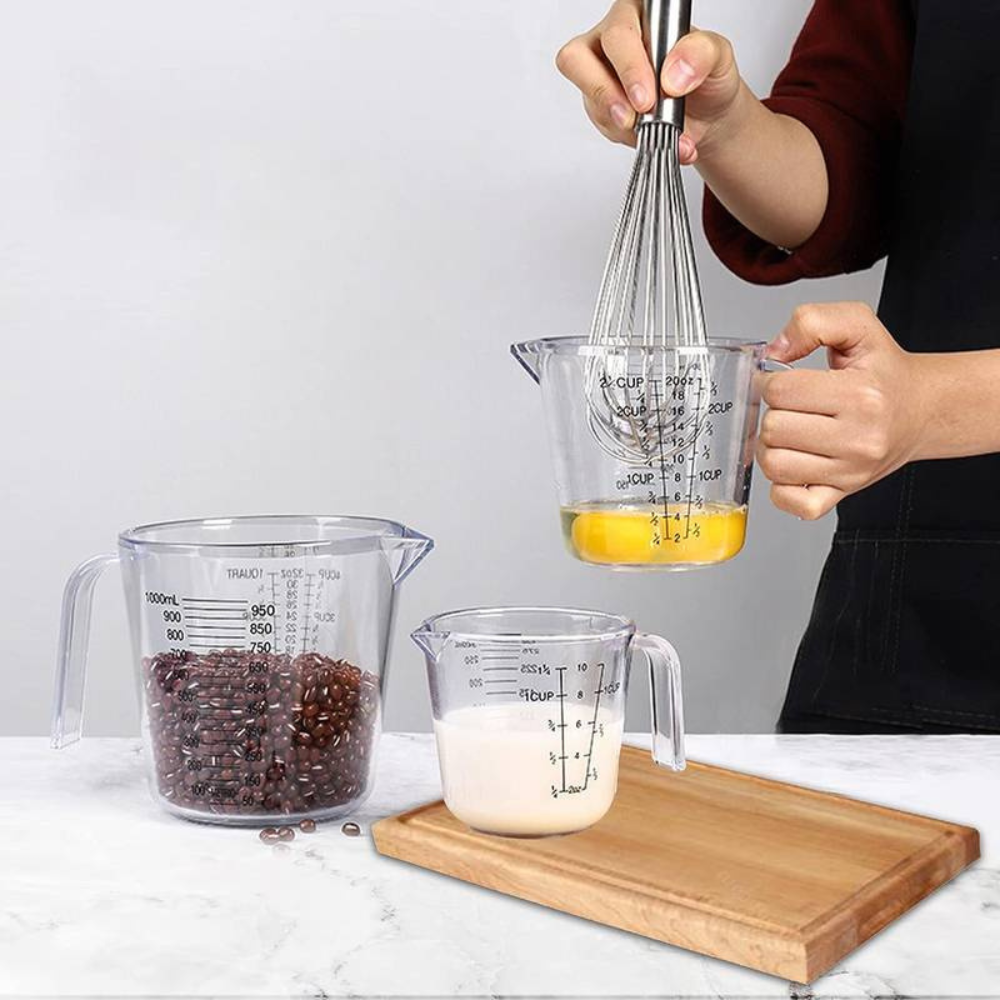
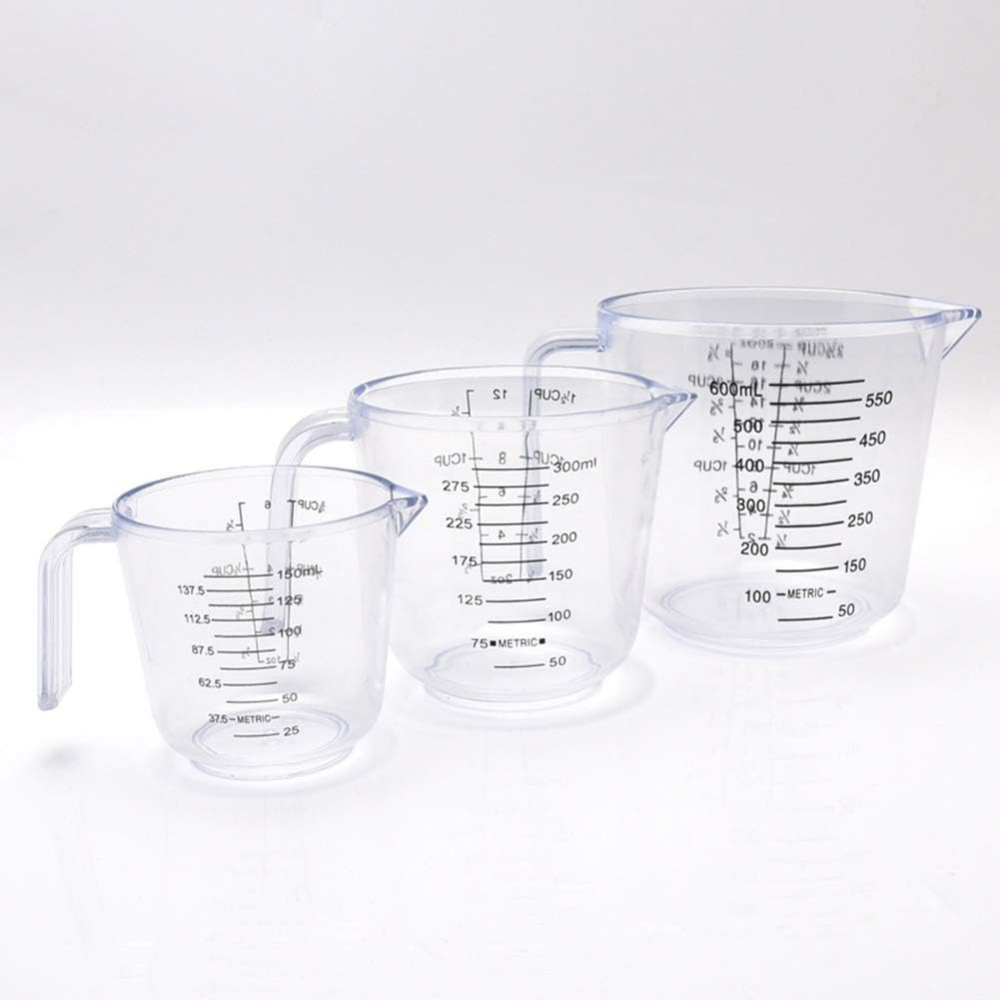
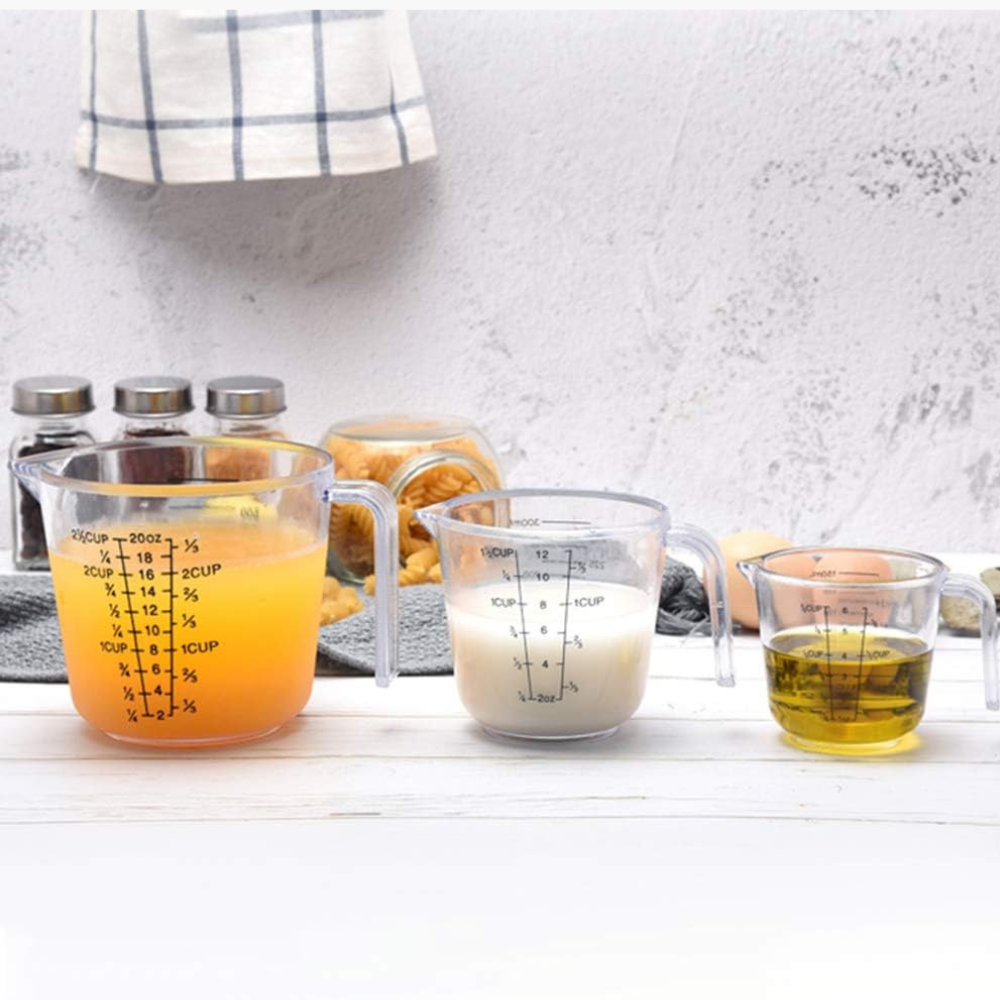
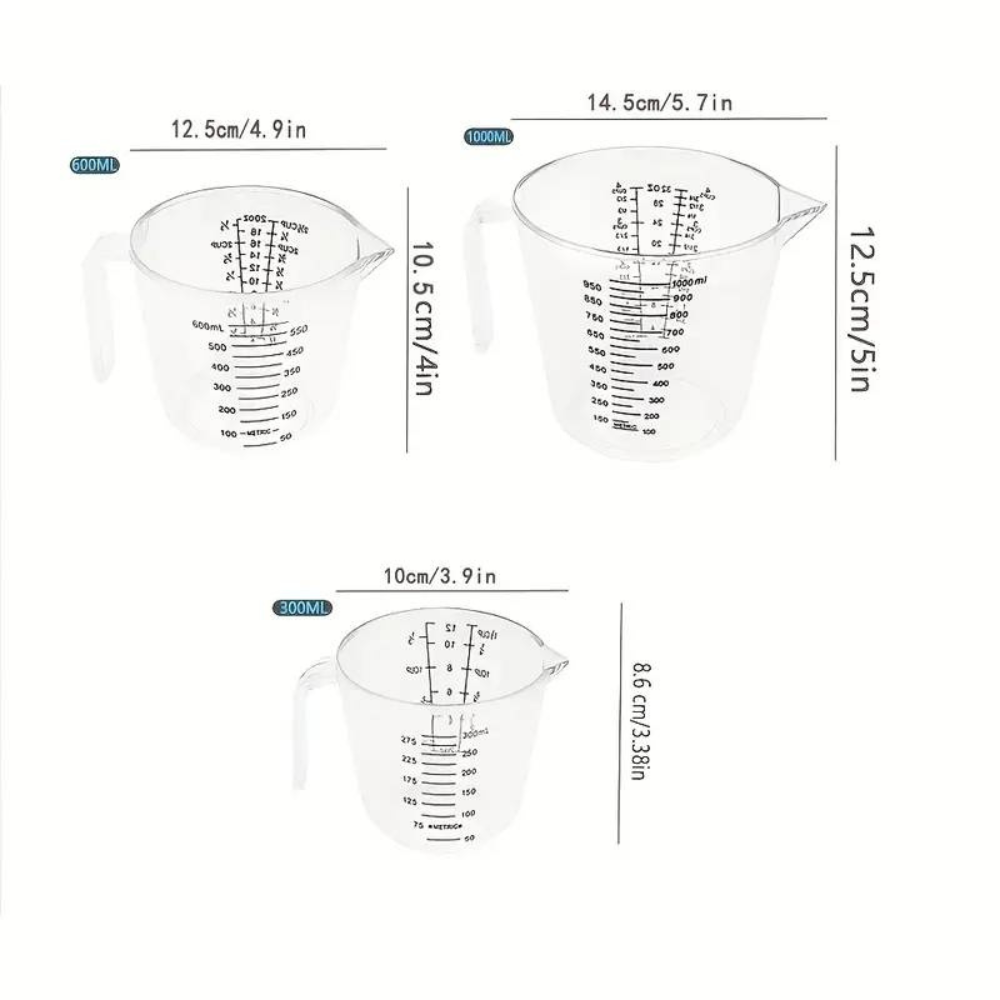
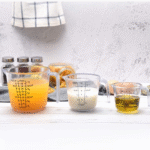
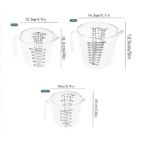
These plastic measuring cups come as a set of three at 1000 ml, 600 ml and 300 ml, in food-safe non-toxic plastic. Having three capacities rather than one matters more than it sounds, because measuring 50 ml in a one-litre jug is guesswork, and the graduations you actually need are the ones close to the amount you are pouring.
Table of Contents
- premium plastic that is safe, non-toxic, affordable, and useful.
- The handle is comfortable to hold and not easy to slide.
- Three sizes available: 1000 ml, 300 ml, and 600 ml; purchase according on your need.
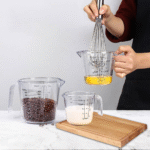
- An useful kitchen baking tool for measuring materials such as milk, tea, and water.
- has a good handle and practical units of measurement.
- Tea, milk, water, and other ingredients may be measured with ease with this multipurpose baking tool.
- Clear layout, simple to read.
- Comfortable and non-slip handle for regular usage in any kitchen. Ideal for pouring after measurement.
- Excellent measurement tool for friends, family, and DIY baking enthusiasts.
Why Choose This Plastic measuring cups
The reason to keep plastic measuring cups within reach is that most cooking failures are measurement failures. Baking in particular is chemistry rather than improvisation, and liquids being out by a tenth is enough to change how a batter behaves. A clear jug with legible markings turns that from an estimate into a number, which is why these are as useful for a first-time baker as for someone cooking every day.
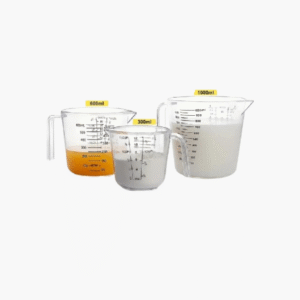
Plastic measuring cups: Materials, Sizes and Features
These plastic measuring cups are made from premium plastic that is safe, non-toxic and practical, with a clear layout that is easy to read at a glance. The handle is comfortable in the hand and not prone to slipping, which matters when the jug is full and you are pouring with one hand. The spout is shaped for pouring after measuring, so the contents go into the bowl rather than down the side. Three sizes are available so you can pick according to what you actually need.
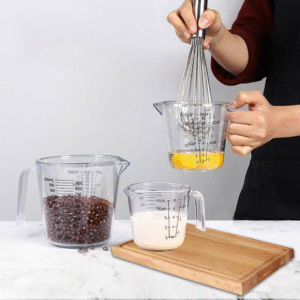
Caring for Your Plastic measuring cups
Caring for plastic measuring cups is straightforward. Wash them in warm soapy water and dry them, and avoid abrasive scourers, which fog the plastic and make the printed graduations progressively harder to read. Keep them out of prolonged direct heat and do not use them for hot oil or boiling liquid unless the individual product states it is suitable. Store them nested to save cupboard space.
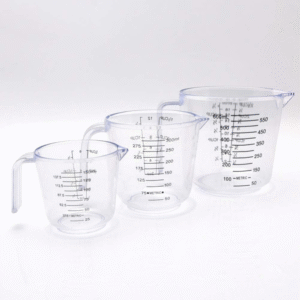
Measuring Accurately
Getting an accurate reading from plastic measuring cups takes one habit: set the jug down on a flat surface and read the marking at eye level rather than holding it up and looking down into it. Looking down at an angle consistently over-reads. They handle milk, water, tea, stock, oil and any other liquid ingredient, and they are just as useful for portioning as for measuring.
Plastic measuring cups: Frequently Asked Questions
What sizes are in the set?
Three cups at 1000 ml, 600 ml and 300 ml.
What material are they?
Premium food-safe plastic that is non-toxic and odourless.
What can I measure with them?
Any liquid ingredient, including milk, water, tea, stock and oil.
Are the handles slippery?
No. The handles are shaped to be comfortable and are not easy to slide out of your grip when the jug is full.
How do I keep the markings readable?
Avoid abrasive scourers. They fog the plastic and wear the printed graduations over time.
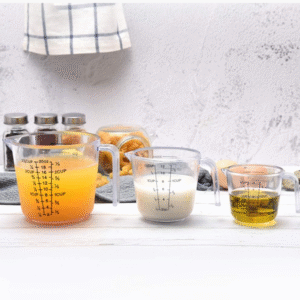
More Plastic measuring cups Options
See the full measuring cups range, or browse all bakeware. For advice on kitchen hygiene and safe food handling at home, see the Food Standards Agency home food safety guidance.

Reviews
There are no reviews yet.