




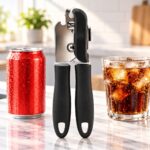


Manual Can Opener with Black Easy-Grip Handles
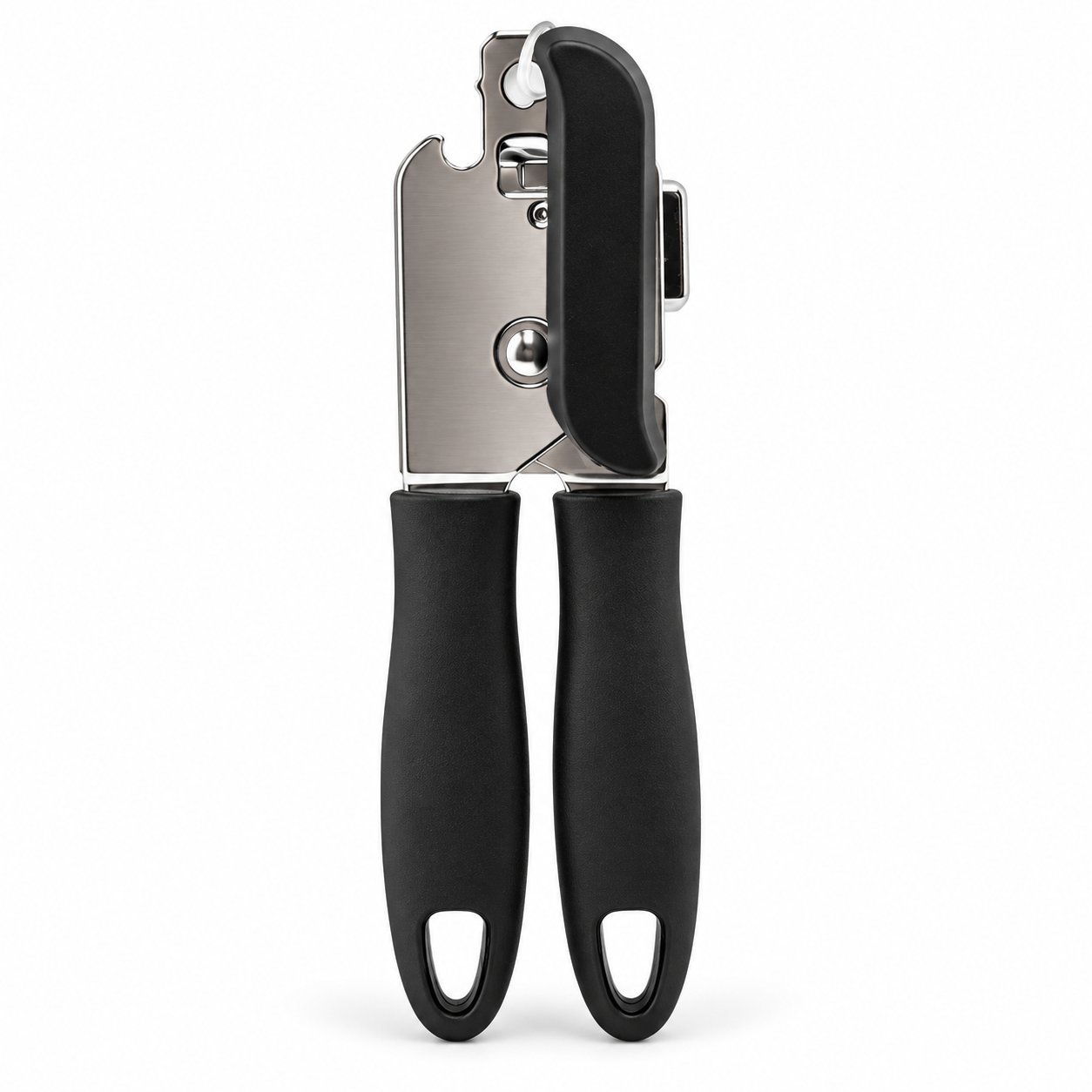
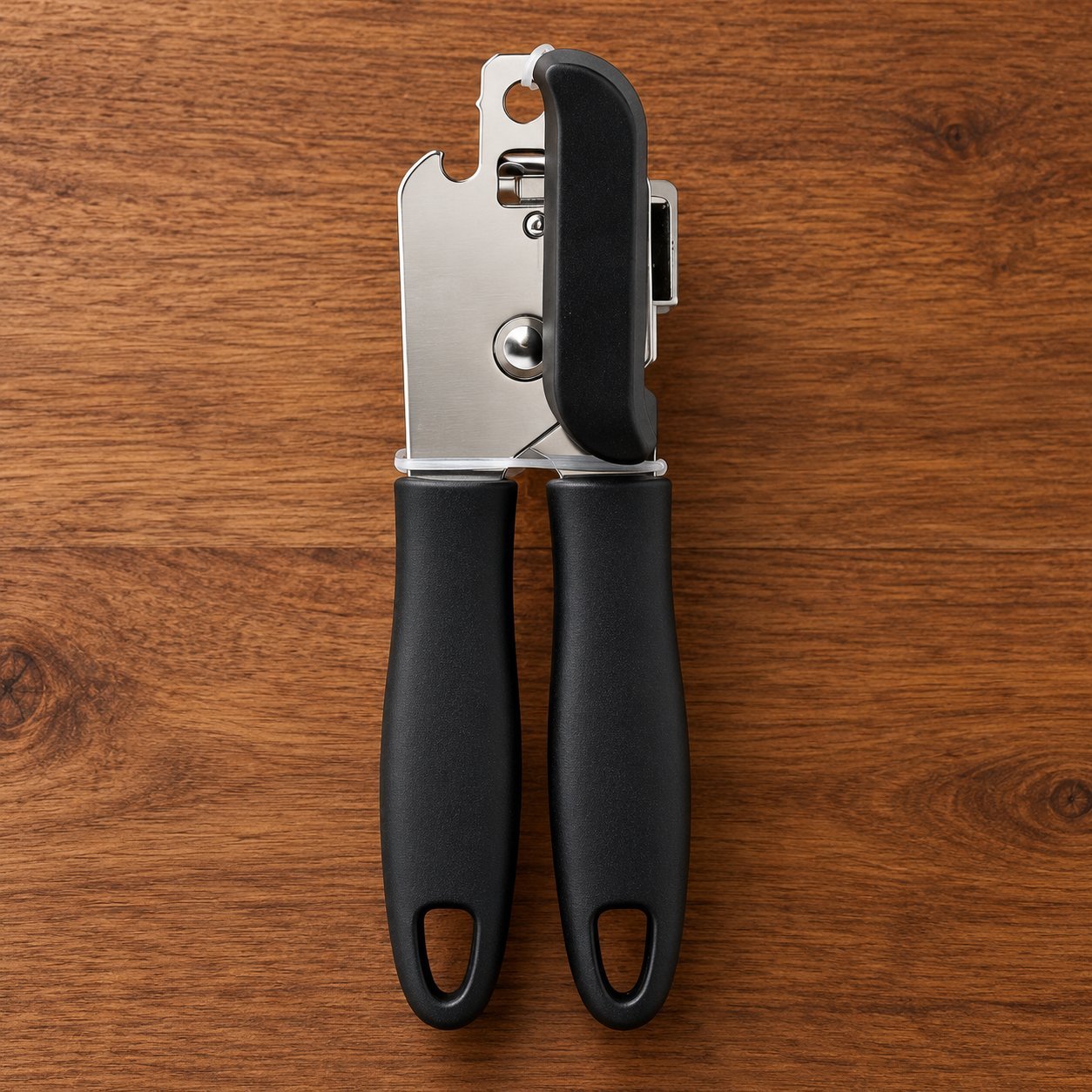
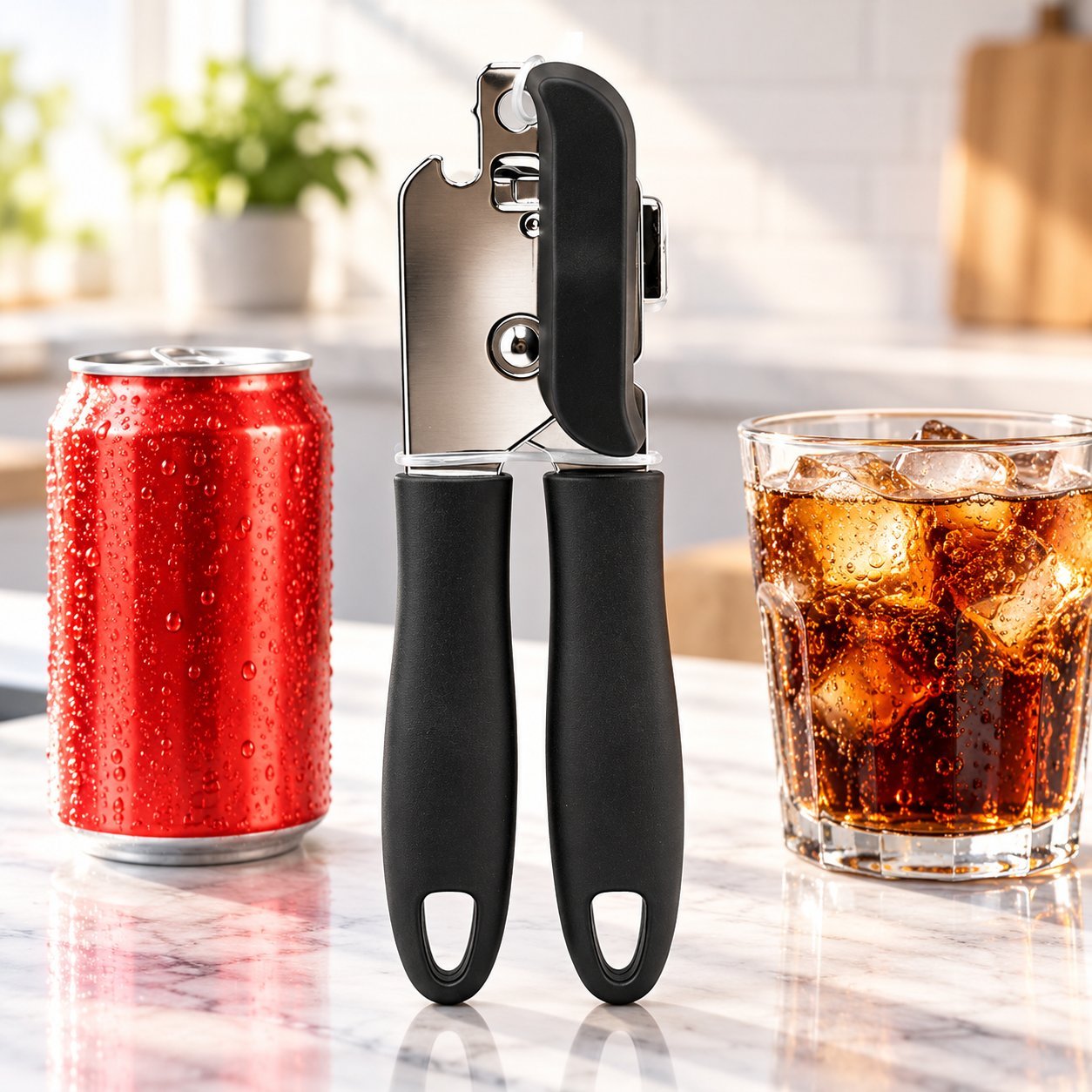
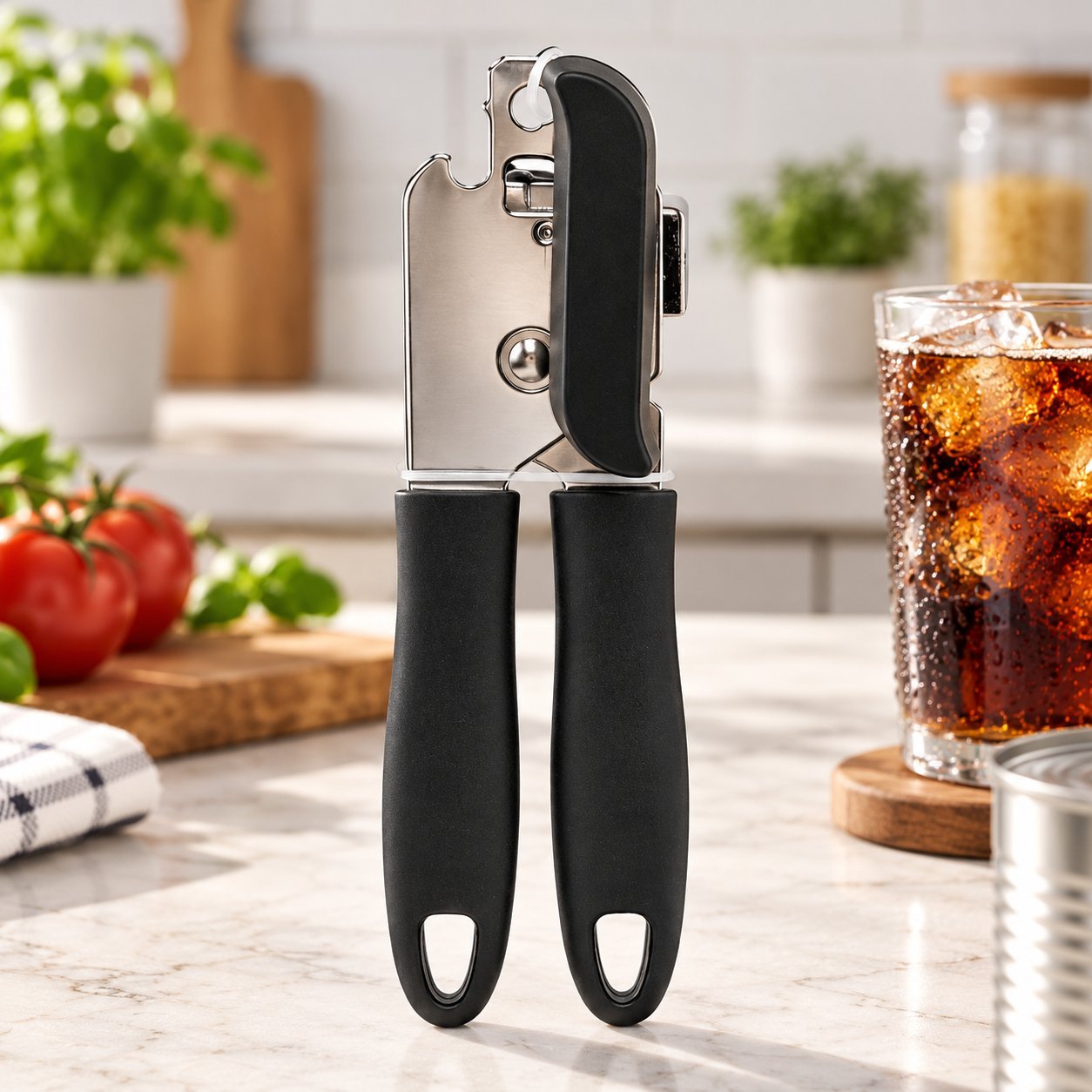
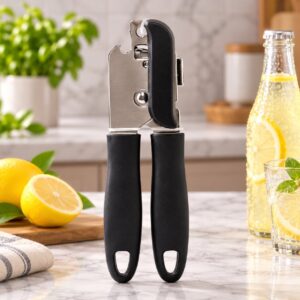
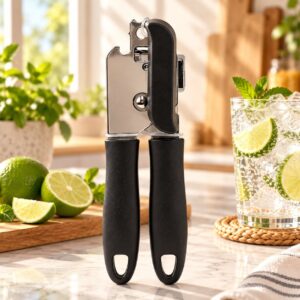
This manual can opener is a handheld tin opener with a metal cutting wheel and two contoured black easy-grip handles with hanging holes. It needs no power and no batteries, so it works anywhere: in the kitchen, on a camping trip, at a picnic or in a catering kitchen.
The dual handles give a firm squeeze on the rim of the can, and the black and silver finish looks neat hanging on a rail. It is a simple, reliable tool for opening tins of beans, tomatoes, fish, fruit and soup every day.
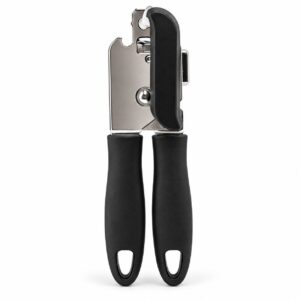
Key features of the manual can opener
- Type: manual, handheld can and tin opener
- Cutting: metal cutting wheel
- Handles: dual contoured black easy-grip handles
- Storage: hanging holes
- Colour: black and silver
- Power: none needed, no batteries
- Use: standard food cans and tins
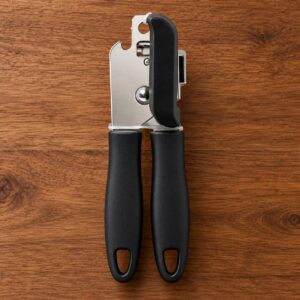
How to use it
Open the handles, place the cutting wheel just inside the rim of the can, and squeeze the handles together until the wheel pierces the lid. Keep the handles squeezed and turn the knob so the opener travels round the rim. When you have gone all the way round, release the handles and lift the lid away carefully.
For the cleanest cut, keep the can on a flat surface and turn at an even pace.
Safety tips
Freshly cut can lids and rims are sharp. Lift the lid with a spoon or fork rather than your fingers, and dispose of it straight away or push it into the can before recycling. Keep the opener out of reach of children.
If a can is bulging, leaking, badly dented or rusty, do not open it: the Food Standards Agency advises throwing such cans away.
Cleaning
Food builds up on the cutting wheel over time, which can spoil the next tin. Rinse the wheel and gears under hot running water after use, scrub them with a small brush and washing-up liquid, and dry the opener thoroughly before hanging it up. A clean, dry manual can opener cuts more smoothly and stays hygienic.
Why a manual opener
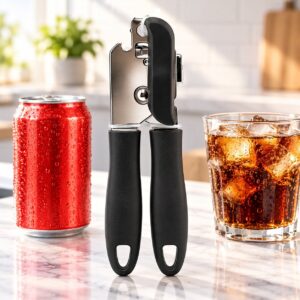
A manual can opener does not need a socket or batteries, is quick to grab from a drawer or hook, and is small enough for a camping box or a picnic bag. For kitchens that open a few tins a week, it is simpler, cheaper and more reliable than an electric opener.
Where to use it
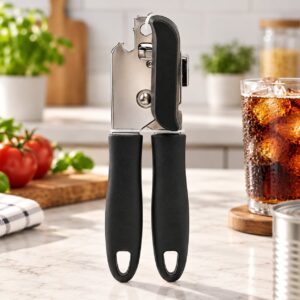
Keep one in the kitchen drawer for tinned tomatoes, beans, chickpeas, tuna and fruit, another in the camping kit or caravan, and one in an office or staff kitchen. Restaurants and caterers keep a manual can opener as a reliable backup.
Storing it
The hanging holes in the handles let you hang the opener on a hook or rail next to other utensils, where it stays dry and easy to find. In a drawer, keep it in a utensil tray so the cutting wheel is not knocked against other tools.
Choosing a can opener
Look for a can opener with a firm grip, a sharp cutting wheel and handles that are comfortable to squeeze, which is exactly what the dual contoured handles of this manual can opener are designed for. Keep a spare in the camping kit or caravan, where there may be no power for an electric opener.
If the cutting wheel ever becomes blunt or damaged after years of use, it is time to replace the opener, as a blunt wheel leaves jagged edges.
Cooking from the cupboard
Tinned foods are the backbone of quick meals: chickpeas for a curry, chopped tomatoes for a pasta sauce, kidney beans for chilli, tuna for a salad, coconut milk for a Thai curry, and fruit for a crumble. A dependable manual can opener means the store cupboard is always ready, even when the power is off.
Comfort and grip
Squeezing a can opener for a full turn can be tiring if the handles are thin or slippery. Contoured, easy-grip handles spread the pressure across your palm and fingers, which helps when opening several tins at once for a family meal or a batch of cooking. A manual can opener that is comfortable to use is one you will reach for every time.
Recycling cans
Rinse empty cans before putting them in the recycling, and push the cut lid inside the can or wrap it, so it cannot cut anyone who handles the bin. Steel and aluminium cans are widely recycled in the UK through household collections.
A small tool that lasts
A well-made manual can opener can last for many years. Keep it clean and dry, avoid using it as a lever or bottle opener for jobs it was not designed for, and store it where the cutting wheel is protected. Looked after like this, the manual can opener will keep opening tins smoothly, meal after meal.
Good for every household
Students, families, older people living alone and busy cooks all rely on tinned food at some point. A simple, comfortable manual can opener is one of the most useful and inexpensive tools in any kitchen drawer, and it makes a practical addition to a first-home starter kit.
At a glance
- Manual Can Opener
- Metal cutting wheel
- Two black easy-grip handles
- Hanging holes
- No batteries needed
- Black and silver
Manual Can Opener questions
Does it need batteries? No. It is fully manual.
What cans does it open? Compatible standard food cans and tins.
What colour is it? Black and silver.
Can I hang it up? Yes, the handles have hanging holes.
Is the manual can opener good for camping? Yes. It needs no power and is small enough for a camping box or picnic bag.
How do I clean it? Rinse and scrub the cutting wheel after use, then dry it thoroughly.
How many are included? One manual can opener.
Is it suitable for restaurants and catering? Yes. It suits home kitchens, restaurants, camping, picnics and catering.
What is the cutting part made of? A metal cutting wheel.
Is it easy to use with weaker hands? The contoured easy-grip handles spread the pressure across your hand, which makes squeezing easier.
Looking for more like this can opener? Browse the full Kitchen Tools & Gadgets collection or the rest of the Kitchen Utensils shop. To learn more, see this overview of can openers.


Reviews
There are no reviews yet.