


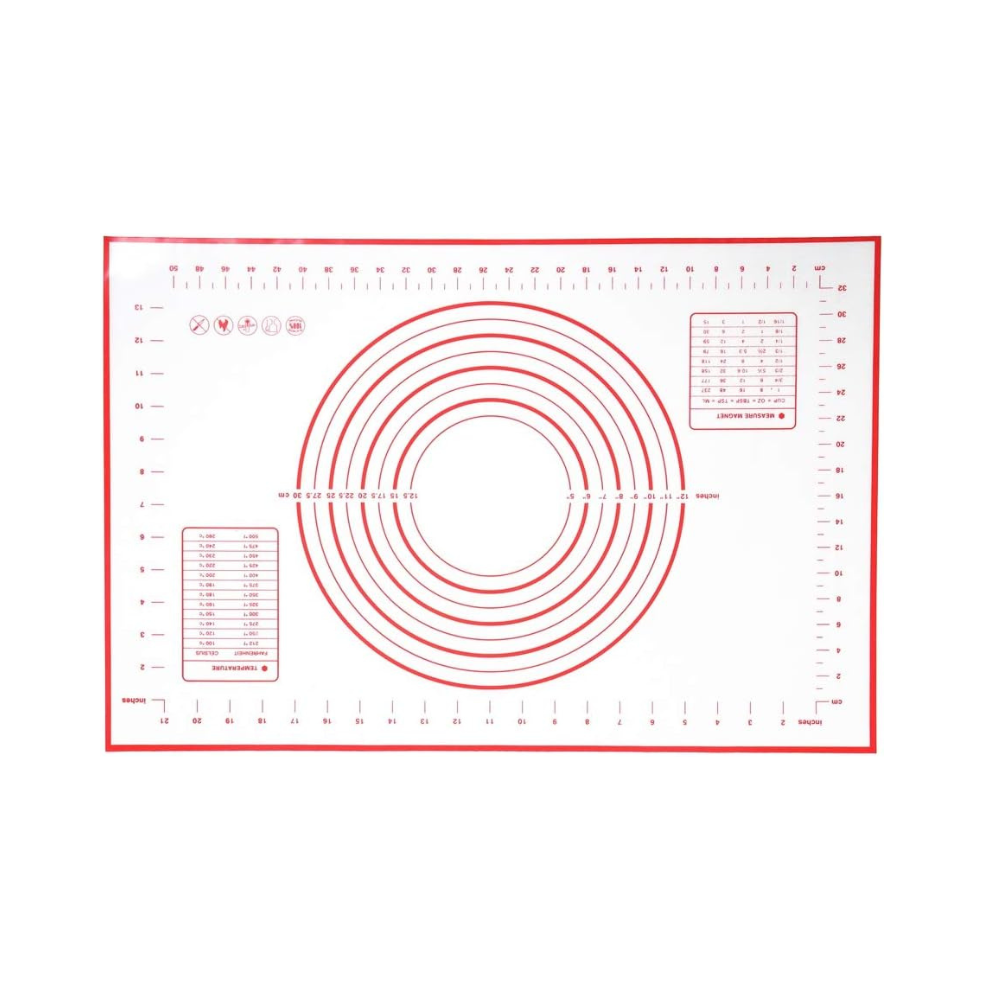
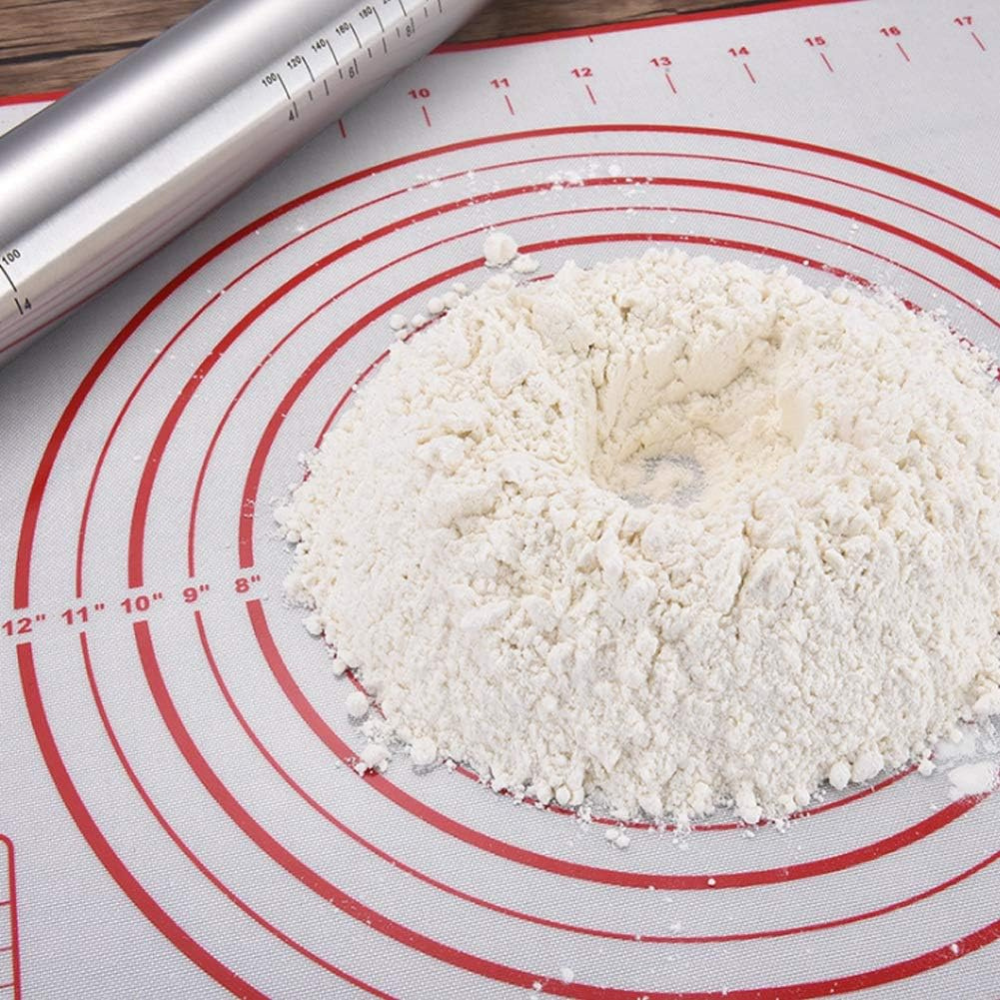
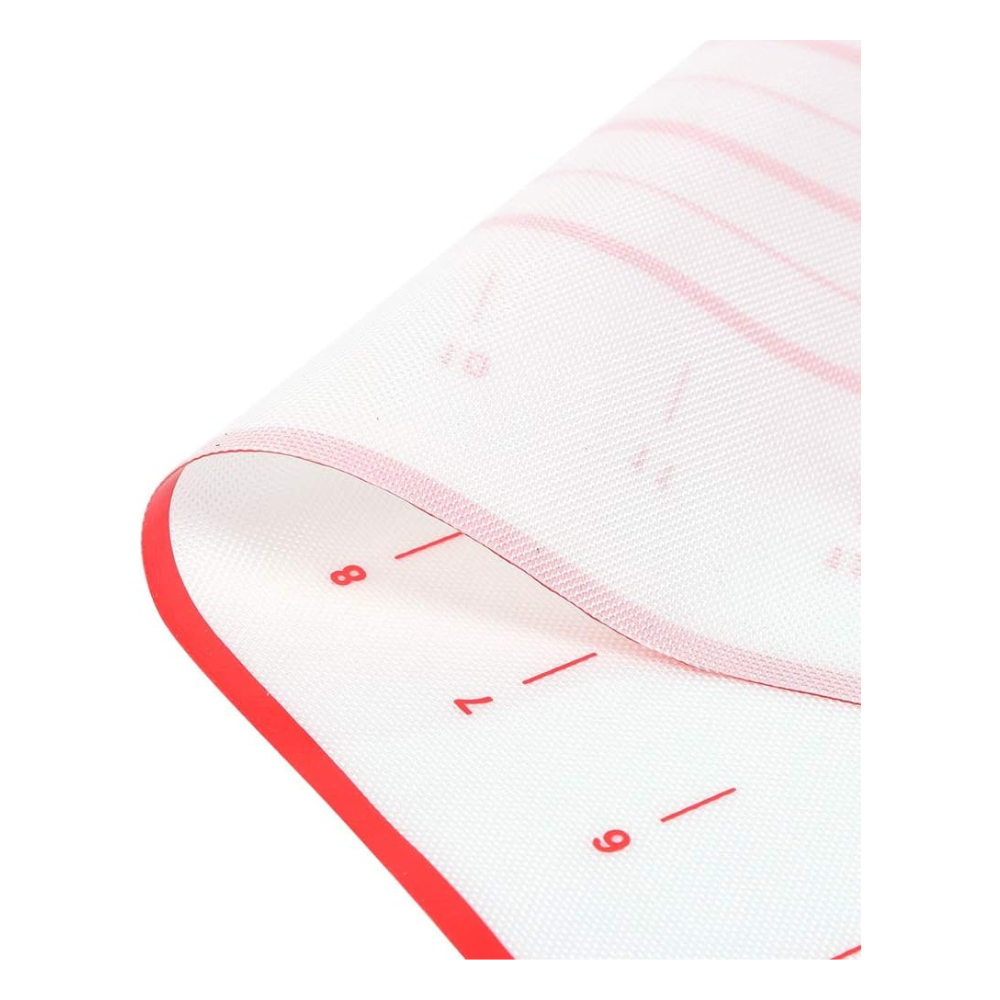
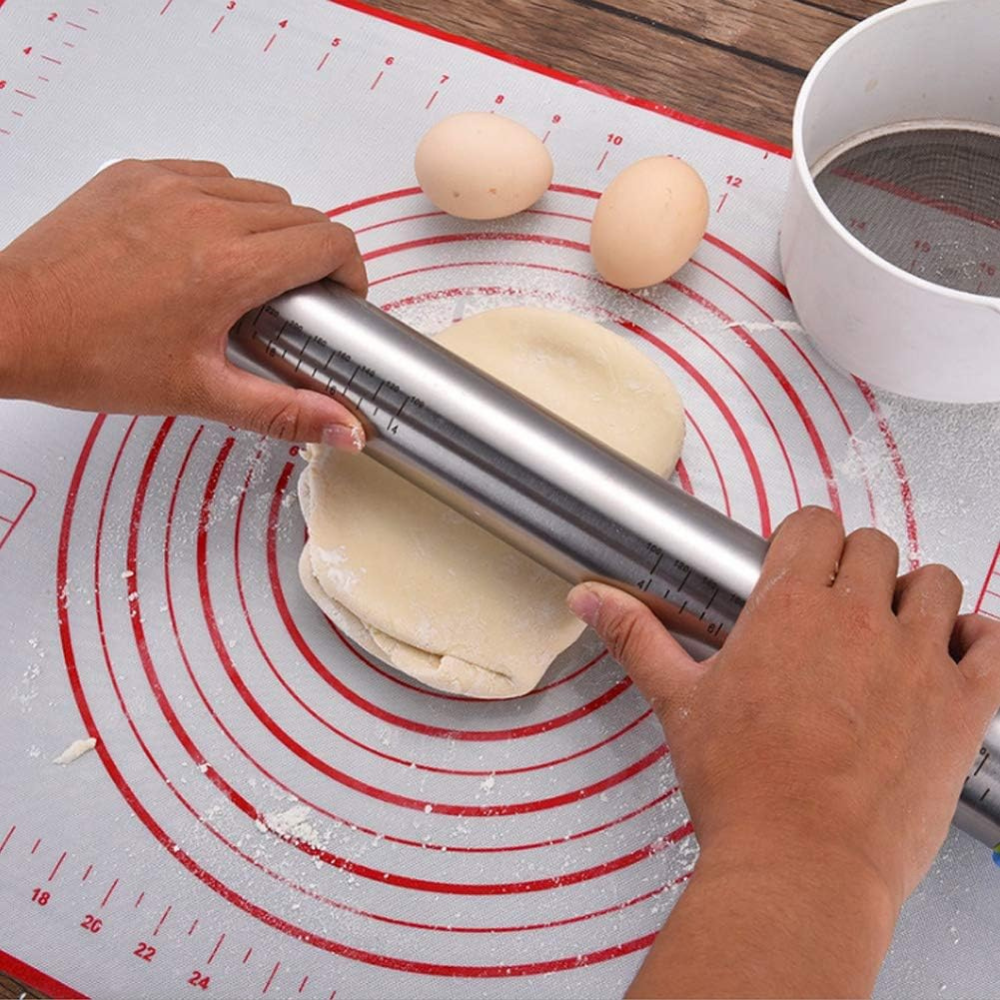
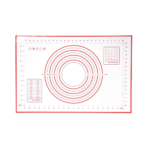
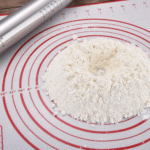

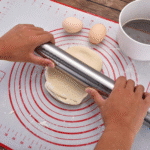

This silicone baking mat is food-grade silicone, sized around 60 x 40 cm, for rolling dough, shaping pastry and lining a work surface. A silicone mat solves the two irritations of rolling directly on a worktop: dough sticking to the surface, and flour ending up everywhere. It rolls up afterwards instead of needing to be scrubbed off the counter.
Table of Contents
One non-slip silicone baking mat that is ideal for baking and cooking comes with a measurement counter, dough rolling mat, and pie crust mat.
- Constructed from premium food-grade silicone, it is long-lasting, resistant to wear, and wear-resistant.
- Its non-stick construction, smooth surface, ease of use, and reusability make it a useful tool for baking and rolling.
- Flexibility is durable, difficult to break, easily stored, and takes up little room when folded.
- High adsorption capacity, able to stick to the tabletop with a tight grip, preventing sliding, and more user-friendly.
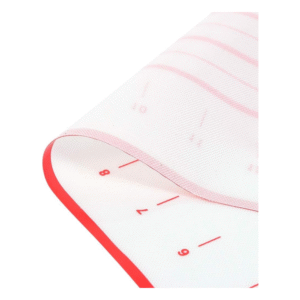
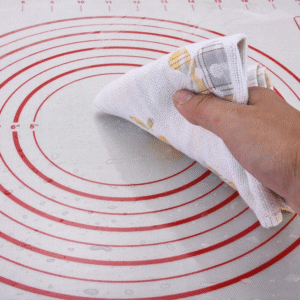
- Double calibration on the rolling dough mat surface makes dose management simple and makes it ideal for use in a home kitchen.
Size: Approx. 60x40cm / 23.6×15.7in
Why Choose This Silicone baking mat
The measurement markings are what make this silicone baking mat more than a non-stick sheet. Rolling to a printed guide means a pie crust actually fits the tin and biscuits come out the same thickness, which is the difference between a tray that bakes evenly and one where the thin edges catch while the middle is still raw. For anyone baking with children, having the sizes printed on the surface takes the guesswork out entirely.
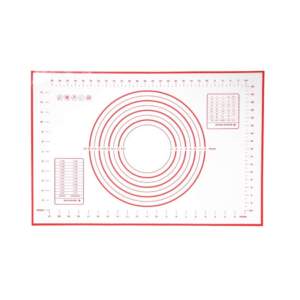
Silicone baking mat: Materials, Sizes and Features
This silicone baking mat is made from premium food-grade silicone, which is what allows it to be flexible, reusable and resistant to wear without cracking. The underside has high adsorption, so it grips a smooth worktop and stays put while you are working rather than travelling across the counter. It is durable enough to resist tearing, yet it folds or rolls flat, so it stores in a drawer rather than needing cupboard space.
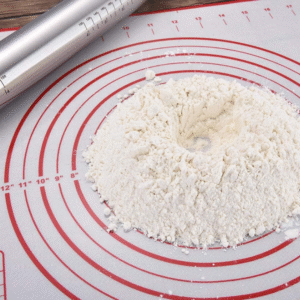
Caring for Your Silicone baking mat
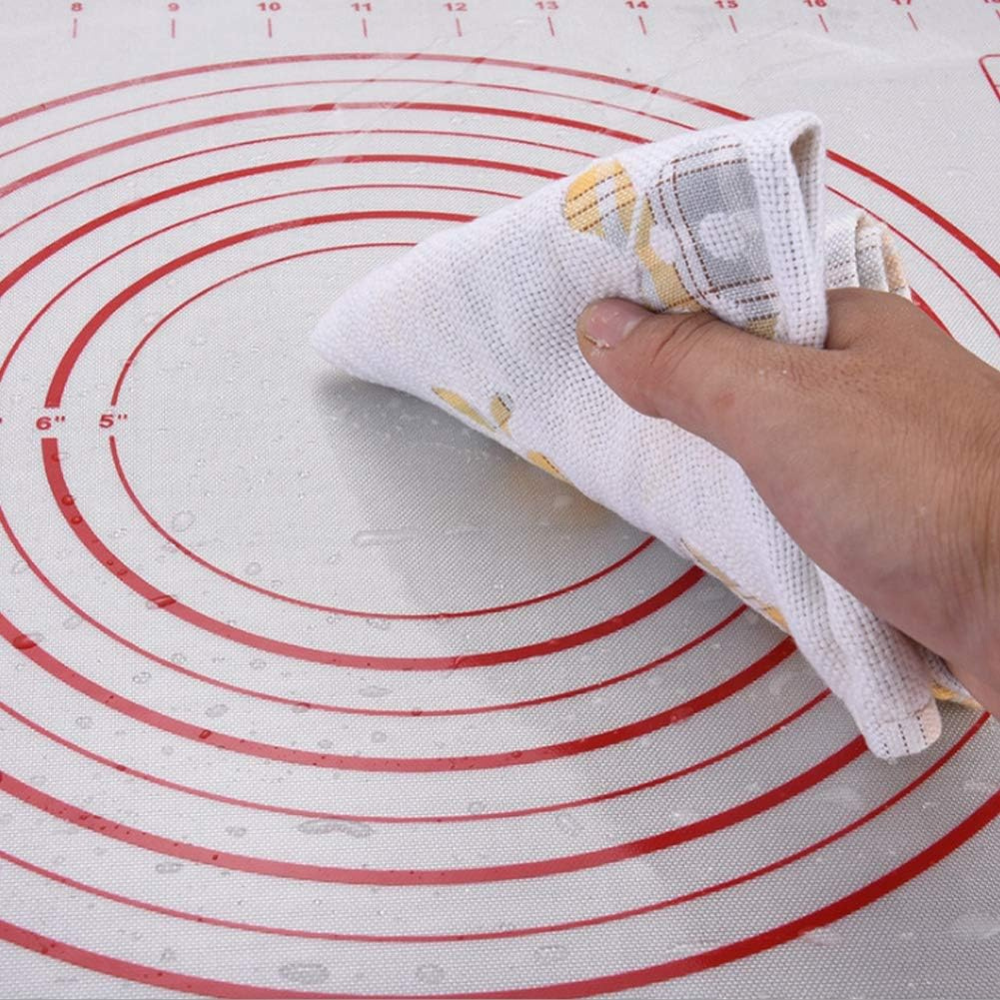
Cleaning a silicone baking mat is quick. Wash it in warm soapy water with a soft cloth, rinse and hang or lay it flat to dry fully before rolling it away, since silicone stored damp can hold a smell. Avoid cutting directly on it with a knife or a sharp pastry wheel, as scores in the surface collect dough and are impossible to clean out properly. Keep it away from direct flame and store it rolled rather than creased into a sharp fold.
Rolling and Baking on Silicone
A silicone baking mat works best on a clean, dry worktop, where the underside grips rather than sliding away from you as you roll. Wipe the counter first and press the mat down from the middle outwards to push out any air underneath. You need noticeably less dusting flour than on a bare surface, which keeps pastry from toughening up with the extra flour worked into it. When the mat is used as an oven liner, sit it on a flat tray rather than straight on an oven rack.
Using a Silicone Baking Mat in the Oven
Laid flat on a baking tray, a silicone baking mat replaces baking paper for biscuits, cookies, meringues, roast vegetables and reheated pastries. Food releases cleanly without greasing, so cookies keep their shape and the tray needs only a quick rinse. Lay the mat flat with no folds or creases before the tray goes into the oven.
Silicone passes heat more gently than a bare metal tray, so the bases of biscuits brown a little less and are less likely to burn. If you like a darker base, add a minute or two to the baking time. For roast vegetables, toss them in a little oil and spread them on the mat; they brown on top and lift off without sticking. Use the mat on a tray, never directly on the oven floor or over a grill element.
A Reusable Alternative to Baking Paper
One silicone baking mat can be washed and used again for years, which saves a lot of baking paper and foil. It is useful away from the oven too: as a non-slip surface for kneading dough, under a bowl while you whisk, or for melted chocolate and caramel decorations, which peel off cleanly once set.
Over time a slightly greasy film can build up on silicone. To remove it, sprinkle the mat with bicarbonate of soda, rub it gently with a damp sponge and rinse well, then dry it fully before rolling it up. Keep one mat for sweet baking and a second for savoury, so biscuits never pick up a hint of garlic or spice.
Baking with Children
A silicone baking mat makes baking with children much less messy. The printed measurements help small bakers roll dough to the right size, the mat grips the worktop so it does not slide while they work, and anything spilled stays on the mat to be rinsed off in the sink.
Let them cut biscuit shapes on the mat with plastic cutters, then move the shapes to a lined tray with a palette knife. Avoid metal knives or pizza wheels on the silicone, which can cut the surface. When you have finished, the mat goes straight into warm soapy water and the worktop underneath needs only a wipe.
Silicone baking mat: Frequently Asked Questions
What size is it?
Approximately 60 x 40 cm, or 23.6 x 15.7 inches.
What is it made from?
Premium food-grade silicone, which is reusable, flexible and resistant to wear.
Will it slide around while I roll?
No. The underside grips a clean, dry worktop, which is what keeps it in place. Wipe the surface first for the best grip.
How do I clean it?
Warm soapy water and a soft cloth. Dry it fully before rolling it up for storage.
How should I store it?
Roll it or fold it loosely. It takes up very little space, but avoid storing it with a sharp crease in it.
More Silicone baking mat Options
See the full baking mats range, or browse all bakeware. For guidance on safe cooking temperatures and reheating food properly, see the Food Standards Agency advice on cooking food safely.




Reviews
There are no reviews yet.